

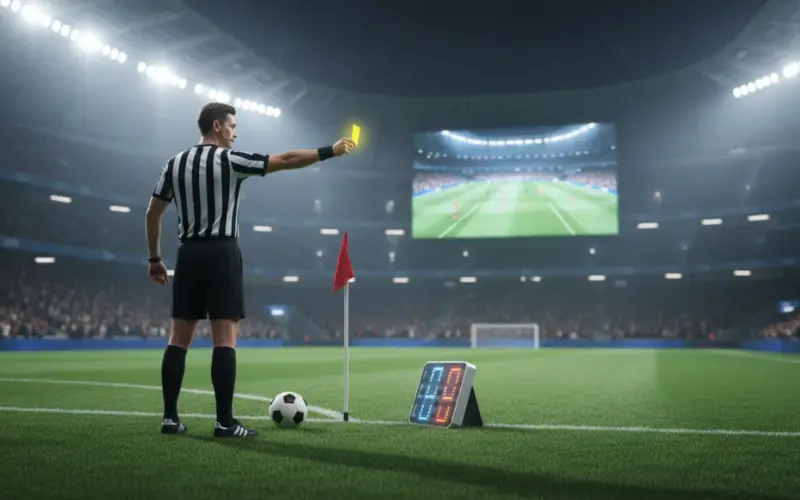
The 2026 FIFA World Cup is set to feel different on the field, not just bigger on the schedule. A new wave of rules is designed to cut delay, tighten discipline, and give referees more authority in key moments.
That means players, coaches, and supporters will all need to adjust quickly. Some changes target time-wasting. Others focus on behavior, medical stoppages, and how video review is used.
Why the Rulebook Is Being Tightened
Football’s lawmakers want matches to move faster and be easier to control. The main goal is to reduce avoidable stoppages and stop teams from using loopholes to slow the game down.
The World Cup will be one of the biggest stages for these updates, so even small details could have major consequences.
Behavior That Could Bring Heavier Punishment
One of the clearest changes concerns confrontation and hidden communication during tense moments.
If a player covers their mouth with a hand, sleeve, or shirt during a heated exchange, that action may now be treated as a red-card offense when it appears tied to abusive or discriminatory speech.
This does not mean every mouth-covered conversation will be punished. The rule is aimed at situations where officials believe a player may be trying to conceal insulting language or misconduct.
Why Officials Want This
The purpose is simple: make it harder for players to hide offensive comments and easier for referees to act on suspicious behavior.
It also signals that discriminatory conduct will be treated more aggressively than before.
Protest Walk-Offs Will Carry More Risk
Another major update targets walk-offs during disputes with referees. If a player leaves the field in protest, the referee may show a red card.
Team staff can also be punished if they encourage players to abandon the pitch.
If the walk-off leads to abandonment, the team could even lose the match by forfeit.
What This Means in Practice
- Players who storm off in protest may be sent off.
- Officials who push for a walk-off may face punishment.
- A team that causes abandonment could forfeit the result.
Restart Delays Will Be Harder to Use
Time-wasting at restarts is another area under pressure. Referees will use a visible five-second countdown for certain restarts, making it harder for teams to stall.
If the clock runs out, the restart can be handed to the other side.
Throw-Ins and Goal Kicks
If a team takes too long on a throw-in, possession can switch to the opponent.
If a goal kick is delayed beyond the allowed count, the other team may be awarded a corner kick. That is a far heavier penalty and could quickly change the match.
Substitutions Will Be Managed More Strictly
Substitutions will also move faster. Once the board goes up, the player leaving the field will have 10 seconds to exit.
They must also leave through the nearest boundary point instead of taking a slow lap across the pitch.
If the player does not comply, the replacement may have to wait before entering.
Common Exceptions
Referees will still have flexibility when safety, injury, or security is involved. Routine stalling, however, is much less likely to be tolerated.
Treatment Breaks Will Be More Controlled
Medical stoppages can no longer be used so easily as tactical pauses. When an outfield player receives treatment and play restarts, that player will usually need to leave the field for one minute.
The aim is to reduce fake or minor stoppages that are used only to interrupt momentum.
When the One-Minute Rule Does Not Apply
- Goalkeeper injuries
- Collisions involving a goalkeeper and an outfield player
- Collisions between teammates that require treatment
- Serious injuries, including possible concussion or head trauma
- A player who is about to take a penalty
Video Review Will Reach More Situations
VAR will have a broader role at the tournament. The system will still be limited, but it will now be able to step in on more clear-cut mistakes.
Second Yellow Card Problems
VAR may now correct an obvious error when a player is shown a red card for a second yellow that should not have been given.
That is important because second-yellow decisions have traditionally been outside normal review.
Wrong Player, Wrong Punishment
If the referee books or sends off the wrong player, video officials can step in and fix the mistake.
This should prevent harsh punishment being placed on the wrong person.
Corner Kicks and Set Pieces
Some incorrect corner kick calls may also be corrected if the error is clear and can be handled quickly.
VAR may also review fouls committed before a free kick or corner is actually taken, especially if attacking players block, hold, or interfere with defenders during set-piece routines.
Every Match Will Include Hydration Breaks
Because the tournament will be played across the United States, Mexico, and Canada, heat management will matter. Every match will include hydration breaks.
Each half will include a three-minute pause, usually near the midpoint of the half.
Referees may shift the timing if another stoppage, such as treatment, happens at the same time.
Goalkeeper Injuries Will Not Create Tactical Time-Outs
Goalkeeper treatment will be handled more carefully. If play stops because a goalkeeper is injured, teams will not be allowed to treat that stoppage like a coaching session.
The idea is to stop injury delays from becoming unofficial team talks.
What Teams Will Need to Change
Clubs and national teams will need to prepare for sharper enforcement. A few seconds lost at a restart could now cost possession or even a dangerous set piece for the opponent.
That raises the value of discipline, fast communication, and cleaner game management.
Key Areas to Watch
- Faster throw-ins and goal kicks
- Quicker substitutions
- Less arguing with officials
- Cleaner behavior during confrontations
- More caution on set-piece contact
What Fans Are Likely to Notice
Supporters should expect more visible referee signals, more strict control over restarts, and a few decisions that feel different from past tournaments.
Some moments that once passed quietly may now trigger a card or a review.
The overall goal is a match that stays moving and is easier to manage from start to finish.
The Bigger Picture
These changes are meant to shape the tournament’s rhythm. Faster restarts, tighter discipline, and broader video review could all influence results in close games.
Teams that adapt early may gain an edge. Teams that keep relying on delay or protest may find the new rules unforgiving.